Custom Fireplaces in Cumming, GA: Indoor and Outdoor Ideas for North Georgia Homes
How a Fireplace Can Change the Way You Use Your Home
A custom fireplace can do much more than fill an empty wall or add a decorative feature to a room. When it is designed around the way a family actually uses its home, a fireplace can become a natural gathering place, an architectural focal point, and a feature that makes a space feel more complete. For homeowners in Cumming and throughout North Georgia, fireplaces can work equally well inside the home or as part of an outdoor living area.
Indoors, a fireplace can help define the layout of a living room, great room, finished basement, or family room. Instead of treating the fireplace as something added after the rest of the space has already been planned, homeowners can make it part of the overall design from the beginning. The size of the room, furniture placement, ceiling height, surrounding walls, and the style of the home can all influence what type of fireplace looks and functions best.
Outdoor fireplaces offer a different kind of benefit. They help turn a patio, covered porch, or backyard entertainment area into a place that feels more like an extension of the home. A fireplace can create a central seating area, provide a comfortable gathering point during cooler evenings, and visually connect other outdoor features such as patios, kitchens, pools, and covered structures.
Popular places to incorporate a custom fireplace include:
- Living rooms and great rooms
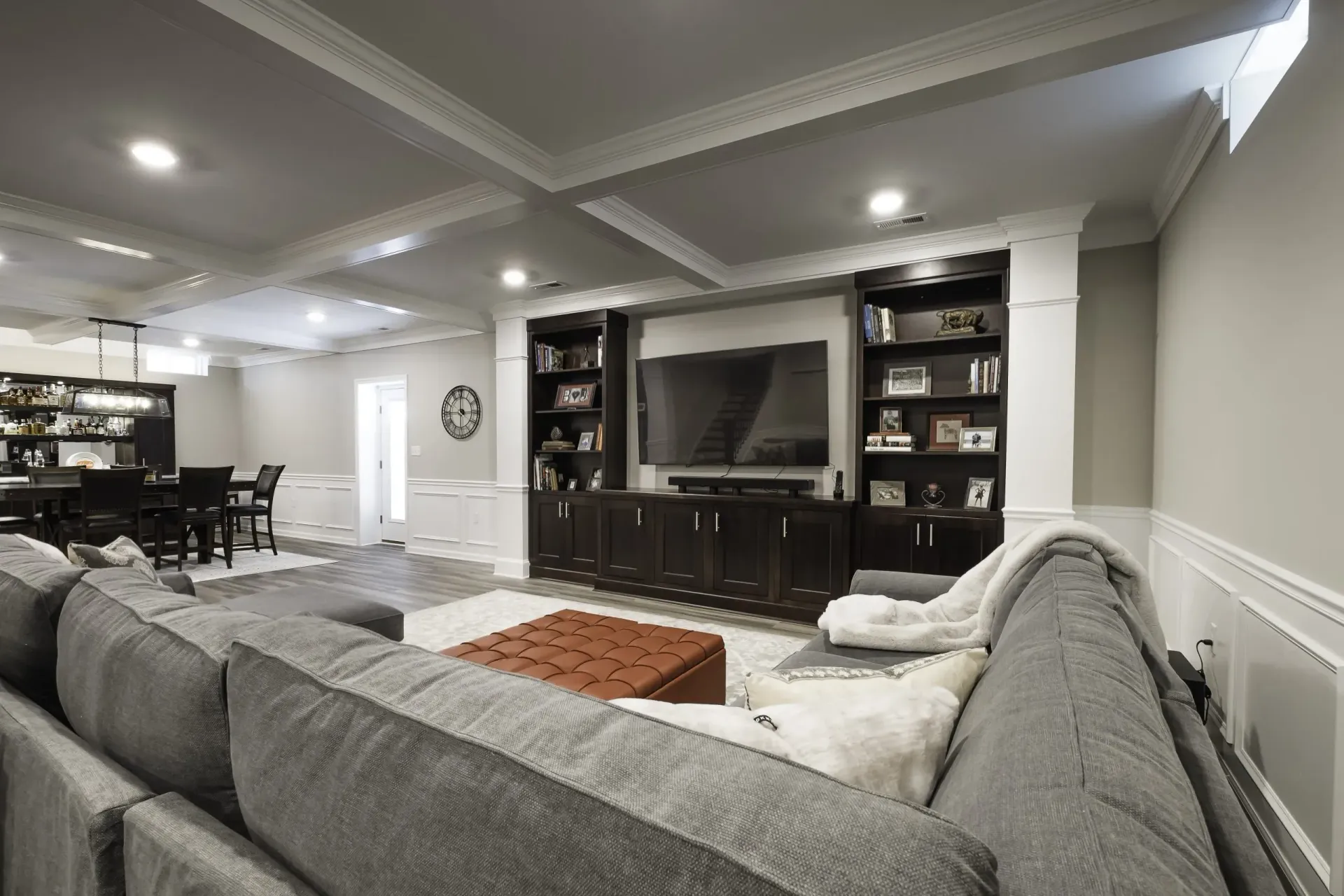
- Finished basements and entertainment spaces
- Primary bedroom sitting areas
- Covered patios and porches
- Outdoor kitchens and dining areas
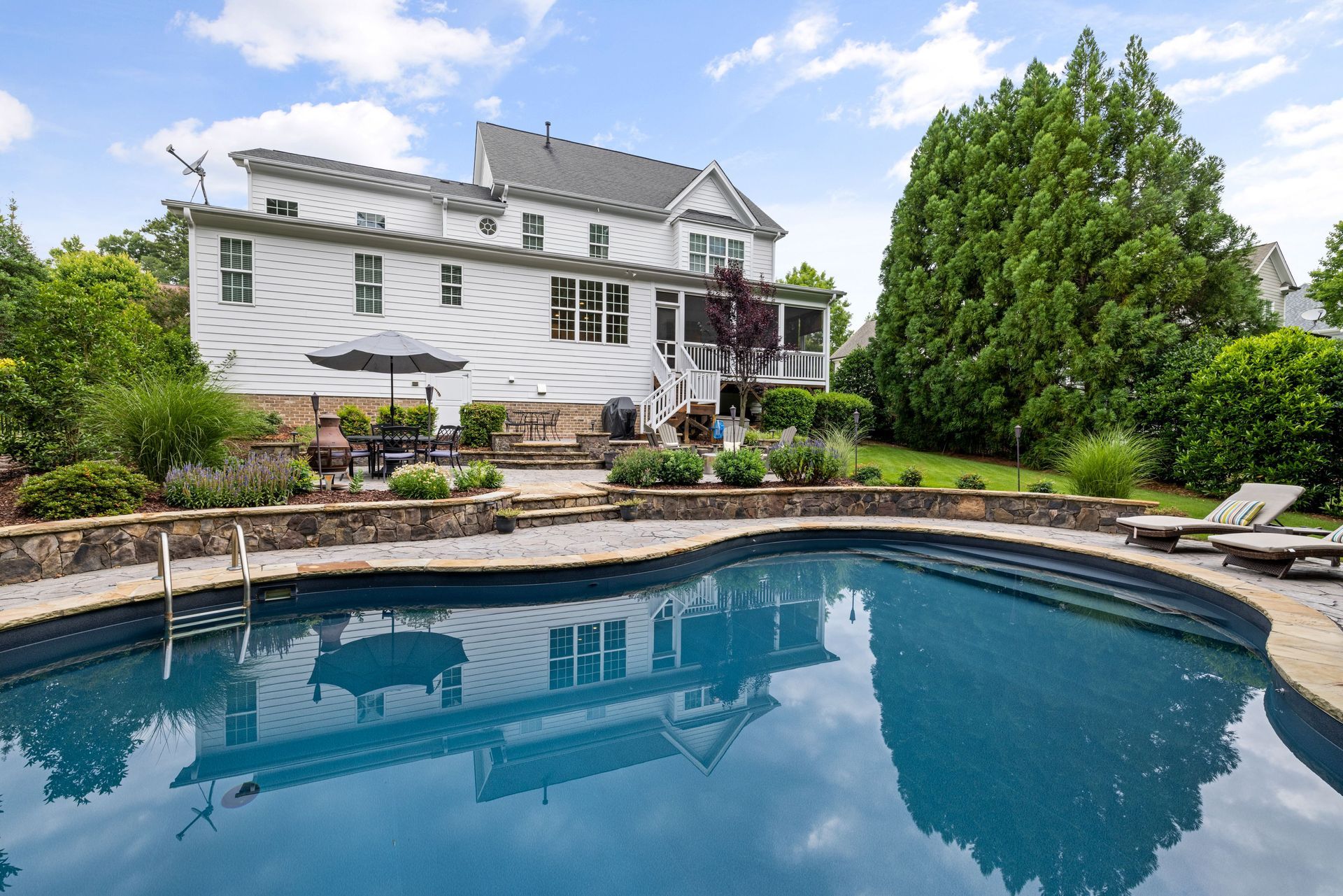
- Poolside entertainment spaces
- Backyard seating and conversation areas
The location should be chosen based on more than appearance. A fireplace affects how people move through the space, where furniture can be placed, and how the room or outdoor area is used. In a living room, for example, homeowners may want the fireplace to serve as the main focal point without competing with a television or blocking important walkways. Outdoors, the fireplace should complement the patio layout and seating arrangement rather than making the area feel cramped.
Designing Around the Style of Your North Georgia Home
One of the advantages of custom fireplace construction is the ability to create something that feels like it has always belonged there. A fireplace can be traditional, rustic, contemporary, or somewhere in between, depending on the architecture and interior or exterior finishes already present.
A stone fireplace may work beautifully in a North Georgia home with natural wood details and views of the surrounding landscape, while clean lines and simpler finishes may better suit a more modern home in Cumming, Alpharetta, or Johns Creek. Brick can create a timeless look, while a combination of stone, wood, and masonry details can make the fireplace feel more distinctive.
The same principle applies outdoors. A fireplace should relate to the house, patio, retaining walls, outdoor kitchen, or other nearby structures. Choosing complementary materials helps the entire backyard feel intentionally designed rather than like several unrelated projects completed at different times.
This is also why it can make sense to plan a fireplace at the same time as a larger remodeling or outdoor construction project. If HG Construction is already building a patio, outdoor kitchen, finished basement, or other custom space, the fireplace can be incorporated into the overall design from the start. That allows the proportions, finishes, electrical needs, masonry work, and surrounding construction to work together as one complete project.
Indoor Fireplace Ideas for Cumming Homes
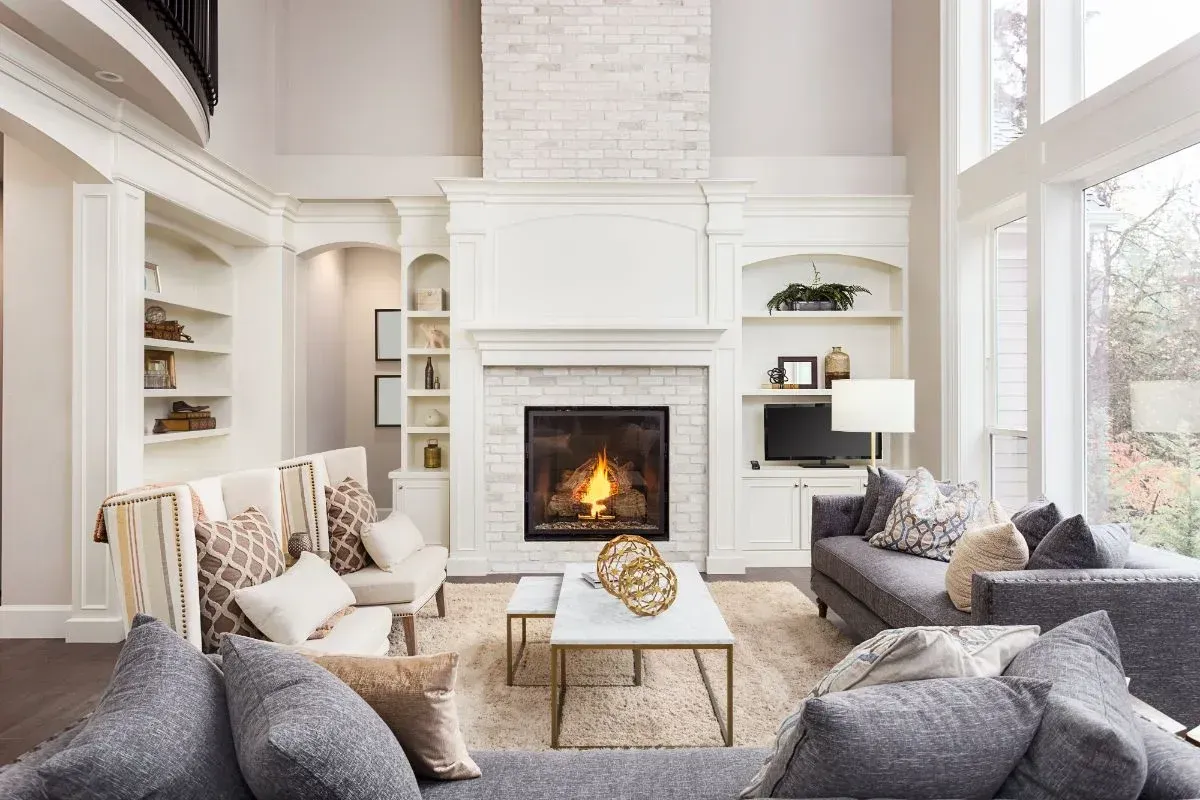
Inside the home, fireplaces have a unique ability to make a room feel more grounded. Even in an open floor plan, a well-designed fireplace can create a clear visual center and help define where people naturally gather. The design does not have to be elaborate to make an impact. Often, the right proportions and materials matter more than adding unnecessary decorative details.
Some homeowners prefer a traditional fireplace with a substantial mantel and stone or brick surround. Others want a cleaner, more contemporary look with minimal trim and simple lines. The fireplace can also be integrated with built-in shelving, cabinetry, storage, or media components when the room layout allows it.
When planning an indoor fireplace, homeowners may want to consider:
- The size and scale of the room
- The height and width of the fireplace surround
- Stone, brick, tile, or other finish materials
- Whether a mantel fits the overall design
- The relationship between the fireplace and a television
- Built-in shelving or cabinetry on surrounding walls
- Furniture placement and traffic flow through the room
Existing fireplaces can also become part of a remodeling project. An older fireplace may still function well but look dated compared with the rest of the home. Updating the surround, mantel, hearth, or adjacent built-ins can dramatically change the room without requiring the entire layout to be redesigned.
For homeowners remodeling a basement or main living area, this can be an ideal time to evaluate the fireplace. Walls may already be changing, electrical work may already be underway, and flooring or finishes may be replaced. Coordinating the fireplace with those improvements can create a more polished final result.
Creating an Outdoor Fireplace That Feels Built Into the Backyard
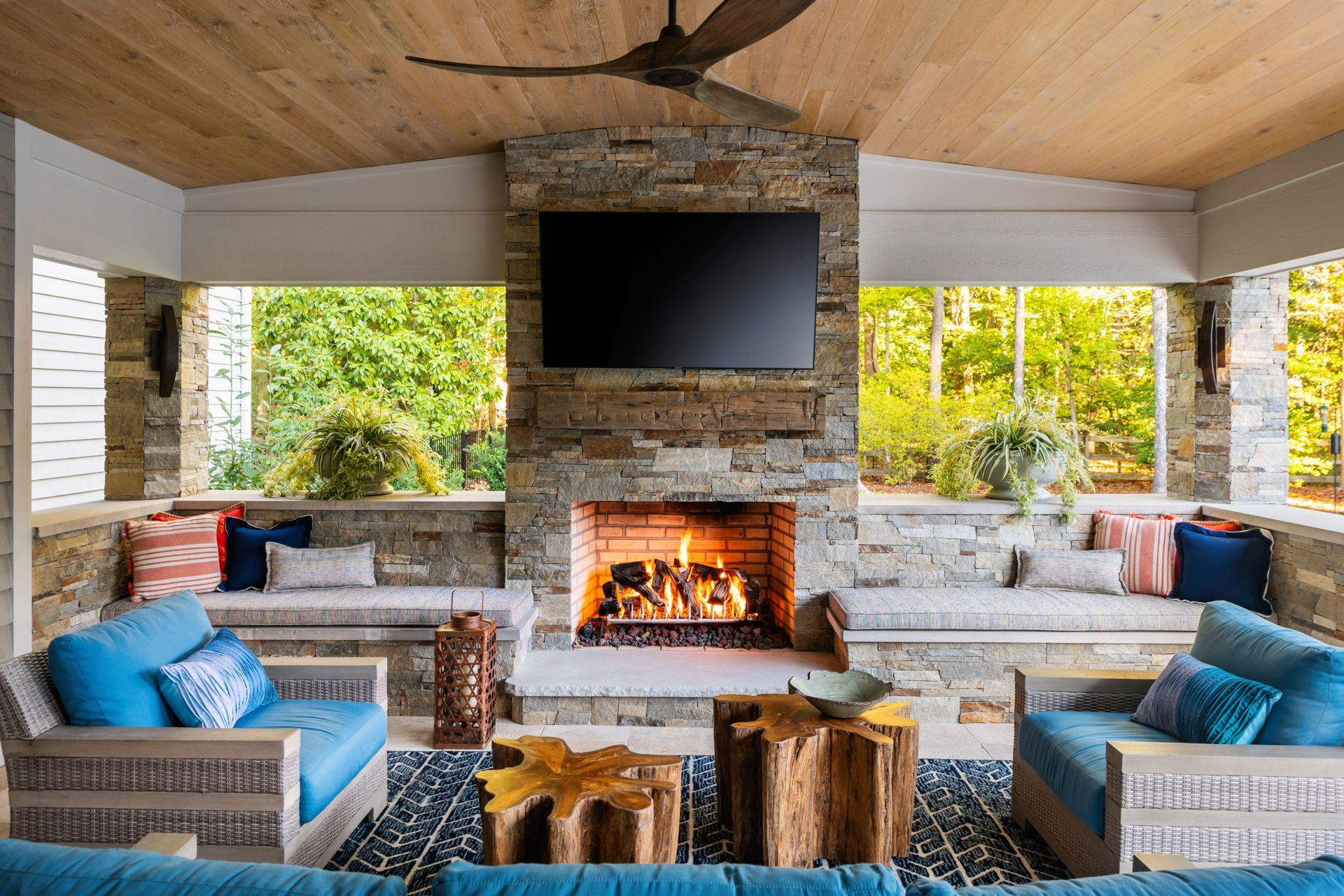
Outdoor fireplaces work best when they feel like part of the larger landscape and entertainment area. Simply placing a fireplace at the edge of a patio does not automatically create a comfortable gathering space. The seating layout, view, prevailing traffic patterns, nearby structures, and surrounding landscaping should all influence the design.
For example, a fireplace may become the anchor of a covered patio with seating arranged around it. On another property, it may sit beside an outdoor kitchen so guests can move naturally between cooking, dining, and relaxing areas. Around a pool, the fireplace might create a separate lounge space where people can gather once they are finished swimming.
Design details worth considering before construction begins include:
- Placement. The fireplace should complement the patio or outdoor room without blocking views or creating awkward walkways.
- Scale. A fireplace that is too small can disappear in a large backyard, while one that is oversized may overwhelm a compact patio.
- Materials. Stone, brick, and other finishes should coordinate with the home and surrounding hardscape.
- Seating. There should be enough room for comfortable furniture placement without crowding the fireplace.
- Nearby features. Outdoor kitchens, pergolas, pools, retaining walls, and landscaping should all be considered during planning.
- Future improvements. Homeowners should think about whether additional outdoor projects may be added later.
North Georgia's mix of warm summers and cooler fall and winter evenings makes outdoor living spaces useful for much of the year. A fireplace can help a patio remain inviting beyond the hottest months while also giving the backyard a strong visual feature even when the fire is not in use.
The most successful outdoor fireplace projects usually begin with a clear plan for the entire space. Instead of choosing the fireplace first and trying to fit everything else around it, homeowners can think about how they want the backyard to function and then design the fireplace as one piece of that larger vision.
What Goes Into Building a Custom Fireplace and Chimney
A custom fireplace is both a design feature and a construction project. Behind the stone, brick, or finished surround are structural and technical details that need to be planned correctly. Depending on the type and location of the fireplace, the project may involve foundations, framing, masonry, venting, chimney construction, roofing details, and integration with existing walls or outdoor structures.
Outdoor fireplaces can require substantial support because masonry features are heavy. The base needs to be designed for the structure being built, and the surrounding patio or hardscape may need to be considered as part of the project. Indoor fireplaces require their own set of considerations, particularly when construction affects existing framing, walls, ceilings, or rooflines.
Before fireplace construction begins, a contractor may evaluate:
- The proposed location and available space
- Structural and foundation requirements
- The size and proportions of the fireplace
- Chimney or venting requirements where applicable
- Connections to surrounding walls, patios, roofs, or structures
- Finish materials such as stone, brick, tile, or masonry
- How the fireplace fits into the larger remodeling or outdoor project
Careful planning is especially important when the fireplace is being incorporated into a covered patio, outdoor kitchen, basement remodel, or room addition. Changes made late in construction can be more complicated than designing the fireplace into the project from the beginning.
This is where working with a contractor experienced in multiple types of residential construction can be valuable. A fireplace does not exist in isolation. It may touch masonry, framing, roofing, flooring, electrical work, cabinetry, patios, and other finishes. Coordinating those pieces can help the completed feature look intentional rather than added on after everything else was finished.
Planning Your Fireplace Project in North Georgia
The best time to think about a custom fireplace is before the rest of the project is fully designed. Whether you are remodeling a living room, finishing a basement, building an outdoor kitchen, or transforming a backyard, early planning gives you more flexibility in choosing the ideal location, size, and design.
It also gives homeowners an opportunity to think about how the fireplace fits into their long-term plans for the property. If you know you eventually want a covered patio, pool, or outdoor kitchen, the fireplace can be positioned so those future improvements work together. Indoors, a fireplace can be planned around cabinetry, furniture, flooring, and lighting rather than forcing those features to adapt later.
A custom fireplace may be a good addition if you want to:
- Create a stronger focal point in a living room or basement
- Update an older fireplace during a home renovation
- Build a comfortable outdoor gathering area
- Extend the usability of a patio into cooler weather
- Coordinate a fireplace with an outdoor kitchen or pool area
- Add a permanent architectural feature that complements your home
HG Construction works with homeowners on custom construction and renovation projects throughout Cumming and surrounding North Georgia communities. From interior remodeling and basement renovations to patios, outdoor kitchens, pools, fireplaces, and other custom features, planning several elements together can create a much more cohesive finished property.
For homeowners in Cumming, Alpharetta, Roswell, Johns Creek, Canton, Marietta, Duluth, Sandy Springs, Lake Lanier, Blue Ridge, Hiawassee, and nearby North Georgia areas, a custom fireplace can be designed around both the property and the way you want to use it. The right materials, proportions, placement, and surrounding construction can turn the fireplace into a feature that feels like a natural part of the home.
If you are considering a custom indoor or outdoor fireplace in Cumming, GA or the surrounding North Georgia area, contact HG Construction to discuss your plans. Whether the fireplace is the centerpiece of the project or one part of a larger renovation, thoughtful design and professional construction can help create a space that is comfortable, functional, and built to fit your home.